
"coffee production growth"
10000 article(s) found

Four forms of growth and production of Ethiopian Coffee in Coffee producing area
Growth and production patterns: there are four growth production patterns in Ethiopia, and 95% of coffee is produced from these types or systems. 1. Forest grows in southern and southwestern Ethiopia, mostly wild or under natural forests. It provides natural shade for coffee trees, but the resistance is slightly weak. This production system accounts for about

Nestlé 2018 results released! Coffee business performs well in China, but performance growth depends on price increases
Professional coffee knowledge exchange More coffee bean information Please pay attention to the coffee workshop (Weixin Official Accounts cafe_style) Nestle just released the annual report card. Nestlé reported organic growth of 3% in 2018, with real internal growth of 2.5% and price factors of 0.5%. Growth was primarily driven by strong growth in the US and China markets, as well as infant nutrition business

Coffee growth process and production process
The flowers of the coffee tree have a faint fragrance like jasmine. If the temperature difference between day and night and humidity are enough, there will be more flowers. The second and third months of the lunar calendar are its florescence, and its flowers are small white flowers. The flowers withered completely within two days to a week after flowering. As a result, the growth process of coffee will produce green fruit after the flowers fade.

Nestle's bottled drinks sell well in China, but the growth of instant coffee slows down.
Nestl é, the world's largest food manufacturer, released its semi-annual report for 2015, which showed that its global sales in the first half of the year were 42.8 billion Swiss francs (280.34 billion yuan), an organic growth of 4.5% and a real internal growth of 1.7%. The operating profit is 15%. Nestl é CEO Paul Bokai (Paul Bulcke) said the first-half results were in line with expectations, even in a difficult environment

Four forms of growth and production of Ethiopian Coffee
Growth and production patterns: There are four growth production patterns in Ethiopia, and 95% of coffee is produced from these types or systems.

Nestle's revenue in the first quarter reached 150 billion, and the coffee business performed well.
On April 22nd, global food giant Nestl é released its first-quarter results for 2021. Nestle's total sales in the first quarter were 21.1 billion Swiss francs (151.559 billion yuan), up 1.3 percent from a year earlier and the biggest quarterly increase in a decade, according to the financial report. this is thanks to increased consumer demand for coffee, dairy products and pet care products during the COVID-19 epidemic.

Nestle's sales reached 91.4 billion Swiss francs last year, with Starbucks contributing part of the results
Professional coffee knowledge exchange More coffee bean information Please pay attention to coffee workshop (Weixin Official Accounts cafe_style) February 14, the world's largest food manufacturer Nestle released 2018 results show that its sales of 91.4 billion Swiss francs, an increase of 2.1%; net profit of 10.1 billion Swiss francs, an increase of 41.6% year-on-year. And get Starbucks product sales rights, China and the United States

The upgrading of consumption forces the upgrading of products and the transformation of instant coffee into high-end coffee is imperative.
Professional coffee knowledge exchange more coffee bean information please follow the coffee workshop (Wechat official account cafe_style) Information Times reporter Liu Fang as a product that has accompanied a generation of growth, the popularity of instant coffee has begun to decline. Recently, relevant data reports show that in China, the number of people who drink instant coffee is gradually decreasing, and the growth rate of its market is slowing down. Experts say that with the consumption market
Research on Market Evaluation and Investment Planning of China's Coffee and Beverage Industry from 2016 to 2020
The "Research report on Market Evaluation and Investment Planning recommendations of China's Coffee and Beverage Industry from 2016 to 2020" released by Booz data introduces the relevant overview of the coffee and beverage industry, the operating environment of China's coffee and beverage industry, and analyzes the current situation of China's coffee and beverage industry, the competition pattern of China's coffee and beverage industry, and the operation of key enterprises in China's coffee and beverage industry.
Restorative growth of coffee production industry in Colombia
It is reported that the Colombian Coffee Growers Association attributed the sharp rebound in production to the cultivation of high-yielding coffee varieties, and the Colombian coffee production industry has finally achieved restorative growth after going through the trough of previous years. As of July this year. Colombian coffee production reached 6.8 million bags (60 kg each), an increase of 13% over the same period last year; the output value exceeded 2.7 trillion pesos (about US $1.43 billion), an increase over the same period last year

Coffee knowledge: the Environmental cycle process of Natural conditions for Coffee growth
Professional coffee knowledge exchange more coffee bean information please pay attention to the coffee workshop (Wechat official account cafe_style) Coffee planting conditions temperature between 1500mm and 25mm climate, and the annual rainfall must reach 1500mm to 2000mm at the same time, to be able to match the flowering cycle of coffee trees, of course, in addition to the seasonal rainfall, there is also fertile soil.

From instant noodles to coffee brewing, the transformation of consumption concept has spawned new growth points in China
Shoppers in the world's second-largest economy are getting richer and older: instant coffee is giving way to brewed coffee, boutique beer is gaining popularity, and the halo of mainstream beauty products is being replaced by more expensive products. Meanwhile, instant noodle sales are declining. Morgan Stanley (32.9, -0.03, -0.09%) and London-based market research firm Mintel Group Ltd.

Growing Community makes dormitory Coffee fragrant
Recently, sponsored by the student growth community of Nankai University and sponsored by the Student Science and Technology Association of the College of Finance, the first phase of the series of food culture experience activities, the romantic event of coffee encounter was held. After dinner, the students walked into the shared space of 5murc dormitory for a romantic encounter with coffee. At the beginning of the activity, the lecturer introduced the growth process and production process of coffee beans. But also for

The growth cycle of Coffee and the Coffee Science of picking Fine products
The growth cycle of coffee and the picking of coffee beans are the seeds of coffee trees. After three or four years of growth, the coffee tree matures and begins to bear fruit, with one fruit arranged in clusters or clusters along the branches. The outside of the seed is a layer of peel, which can be picked as soon as it turns red. Under the red skin (exocarp) there is a layer of pulp (mesocarp), inside is a small thin layer, and then there is a layer like parchment

It is expected that China's coffee market will maintain a high growth rate in the next five years.
Following Kaiping (official Wechat account vdailycom) found that Beautiful Cafe opened a small shop of its own from 2011 to 2016. China's coffee market grew at a compound annual rate of 13.5%, reaching 14.793 billion yuan in 2016. According to a survey in 12 inland cities, 32% of city dwellers drink coffee. Among them, young men and women, housewives and urban white-collar workers become drinks.

Introduction to the characteristics of taste and growth environment of Colombian coffee flavor description area
It is well known that in the coffee growing industry, the rainy season determines the harvest season of coffee. Throughout Colombia, the main harvest season of Colombian coffee is from October to February of the following year; the secondary harvest season is from April to September every year. It is generally believed that the quality of the main production season is better than that of the secondary production season. Columby

Coffee shell has new life, caffeine hair conditioner grows hair
Communication of professional baristas Please follow a caffeine hair conditioner made from Yunlin Gukeng Coffee extract in the coffee workshop (Wechat official account cafe_style). After being tested by the Institute of Cosmetic Science and Technology of Hongguang University, 20 female subjects have used it for 8 weeks. the results show that the average hair growth is 6.1cm and the longest is 7.2cm, which is 3 to 4 times the average growth rate. I heard that the subjects
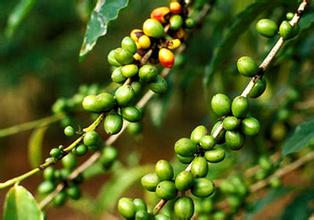
Introduction to the characteristic flavor of four forms of Ethiopian coffee beans grown and produced in Ethiopia coffee
Growth and production patterns: there are four growth production patterns in Ethiopia, and 95% of coffee is produced from these types or systems. 1. Forest grows in southern and southwestern Ethiopia, mostly wild or under natural forests. It provides natural shade for coffee trees, but the resistance is slightly weak. This production system accounts for about

Is Nestl é too optimistic about instant coffee and a drag on mergers and acquisitions?
In February 2015, nearly 400 tons of unexpired Nestle coffee was destroyed in Dongguan, Guangdong, with a market value of nearly 10 million. Nestl é officials responded that the move was to keep products fresh and destroy stocks. The dumping of instant coffee by Nestl é (China) Co., Ltd. (hereinafter referred to as Nestle China) is the largest destruction of instant coffee since the factory was established in 1992. Xu Xiongjun, an expert on strategic positioning of food and beverage, believes that
The growth experience of coffee
Coffee seedlings do not blossom until about 5 years. Coffee begins to wither after flowering for 2-3 days. Green fruit gradually turns yellow after a few months. In June-September, it begins to turn red. There are roughly three varieties of coffee grown on a large scale: Arabica, also known as Arabica, which accounts for about 70% of the world's coffee acreage. The bean shape is slender, with an S-shaped line in the middle, and is native to